

Subscription revenue is supposed to be stable. Predictable. Reliable.
Yet many WooCommerce store owners reach a point where recurring revenue starts behaving strangely. Numbers fluctuate without a clear reason. Monthly totals look inconsistent. Forecasts stop matching reality.
What makes this more frustrating is that nothing obvious appears broken. Payments are processing. Subscriptions are active. Customers haven’t canceled.
And still, revenue feels unreliable.
This isn’t bad luck.
It isn’t seasonality.
And it’s rarely just a payment issue.
Unpredictable subscription revenue is almost always a symptom, not the real problem.
Unpredictability Is A Signal, Not A Failure
When subscription revenue becomes inconsistent, most store owners assume something has gone wrong recently:
- A gateway update
- A plugin conflict
- A sudden change in customer behavior
In reality, revenue instability usually builds slowly. The system weakens over time until the numbers finally start showing it.
Subscriptions don’t fail loudly. They fail quietly.
Small friction points compound. Customer flexibility decreases. Operational blind spots grow. And eventually, revenue stops behaving the way it used to.
By the time the issue becomes visible in reports, the underlying cause has often existed for months.
Where Subscription Revenue Quietly Breaks Down
Unpredictability rarely comes from a single failure. It comes from multiple weak points that reinforce each other.
Customers Change, Systems Don’t
Customer needs evolve. Budgets fluctuate. Usage patterns change.
When subscription systems remain rigid, customers don’t immediately cancel – they disengage first. Skipped payments, delayed renewals and failed charges become more frequent.
Revenue erosion begins long before churn is recorded.
Why Subscription Revenue Becomes Unpredictable
Recurring billing works best when customers feel in control.
Without pause options, flexible schedules or visibility into upcoming charges, subscriptions become a source of friction instead of convenience.
Customers don’t always cancel when they feel fatigue. Often, they simply let payments fail or delay action.
From the store’s perspective, revenue loss looks random. From the customer’s perspective, it was inevitable.
Billing Cycles Don’t Match Real Usage
Many stores rely on fixed renewal cycles that don’t reflect how customers actually consume products.
When billing feels misaligned with value, renewals become fragile. Even loyal customers hesitate.
This mismatch creates volatility that no discount or reminder email can fully solve.
Lifecycle Blind Spots
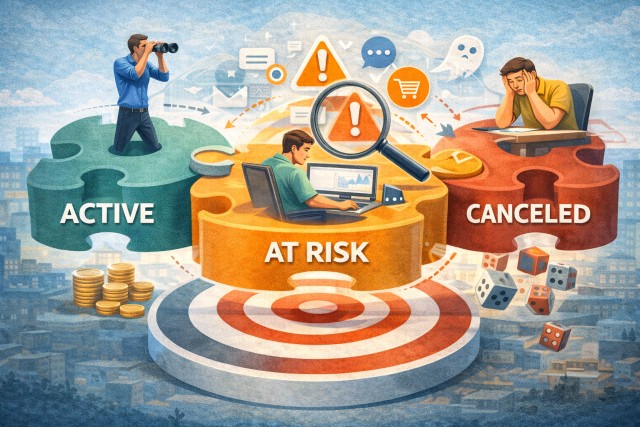
Most dashboards focus on active vs canceled subscriptions.
What’s missing is the middle ground:
- Subscriptions at risk
- Subscribers disengaging but not canceled
- Renewals technically active but operationally unstable
Revenue becomes unpredictable because stores are measuring the wrong signals.
The Gap Between Active Subscriptions And Active Revenue
One of the most misunderstood aspects of subscription businesses is the difference between subscriptions that exist and subscriptions that reliably generate revenue.
An “active” subscription does not guarantee:
- Successful renewals
- Consistent billing
- Long-term value
This gap widens when systems lack visibility into renewal health and customer intent.
As this gap grows, revenue forecasting becomes unreliable even though subscription counts remain steady.
This is where many WooCommerce subscription stores get stuck: numbers look healthy on the surface but cash flow tells a different story.
Why Stores Notice The Problem Too Late
Most stores react to cancellations.
By the time a customer cancels, the damage is already done. Engagement has dropped. Trust has weakened. Revenue has already become unstable.
The early warning signs are usually present:
- Irregular renewals
- Increased support tickets
- Manual interventions
- Customer confusion around billing
But without structured systems, these signals remain disconnected.
The result is reactive decision-making instead of proactive stability.
The Real Cost of Revenue Instability
Unpredictable subscription revenue affects more than monthly totals.
It impacts:
- Inventory planning
- Cash flow forecasting
- Marketing spend confidence
- Customer support workload
- Long-term growth decisions
When revenue can’t be trusted, scaling becomes risky.
Many businesses stall not because demand disappears but because predictability does.
What A Healthy Subscription System Actually Looks Like
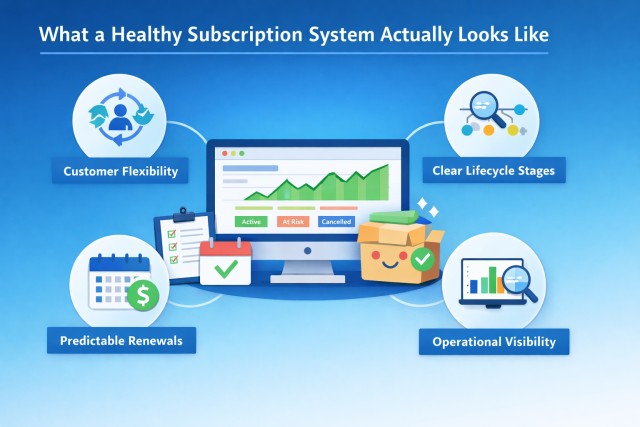
Stable subscription revenue is not about maximizing charges. It’s about designing systems that absorb change without breaking.
Healthy systems share a few characteristics:
- Customer flexibility without manual intervention
- Clear lifecycle states beyond active and canceled
- Predictable renewal behavior, not just renewal attempts
- Operational visibility across subscription stages
When these elements are present, revenue becomes resilient. Fluctuations still happen but they’re understandable and manageable.
Designing Stability Without Adding Complexity
The biggest misconception about subscription management is that better control requires more complexity.
In reality, instability often comes from fragmented tools, manual workflows and disconnected logic.
Modern subscription systems aim to simplify:
- Renewal handling
- Customer actions
- Subscription lifecycle management
This is where solutions like Reordere fit naturally not as an add-on but as part of a more thoughtful subscription framework that prioritizes predictability and customer control.
When systems are designed around how subscriptions actually behave over time, revenue stops feeling fragile.
Read More : The Ultimate Engine For E-commerce Growth: Why ReOrdeRe Is The Best Subscription WooCommerce Plugin
How Predictability Changes Long-Term Growth
Once subscription revenue becomes stable, decision-making changes.
Marketing budgets feel safer. Inventory planning becomes accurate. Growth targets become realistic instead of aspirational.
Predictability unlocks confidence.
And confidence is what allows subscription businesses to scale without constantly reacting to surprises.
Predictability Is Designed, Not Hoped For
Subscription revenue doesn’t become unpredictable overnight.
It drifts when systems stop reflecting customer reality.
The good news is that instability isn’t permanent. With the right structure, visibility and flexibility, recurring revenue can return to what it was meant to be: reliable, measurable and scalable.
Predictability isn’t luck.
It’s the outcome of intentional design.







Leave A Comment